A WATERY, WOODSY WORLD
Updated: Sep 25, 2025
July 2023


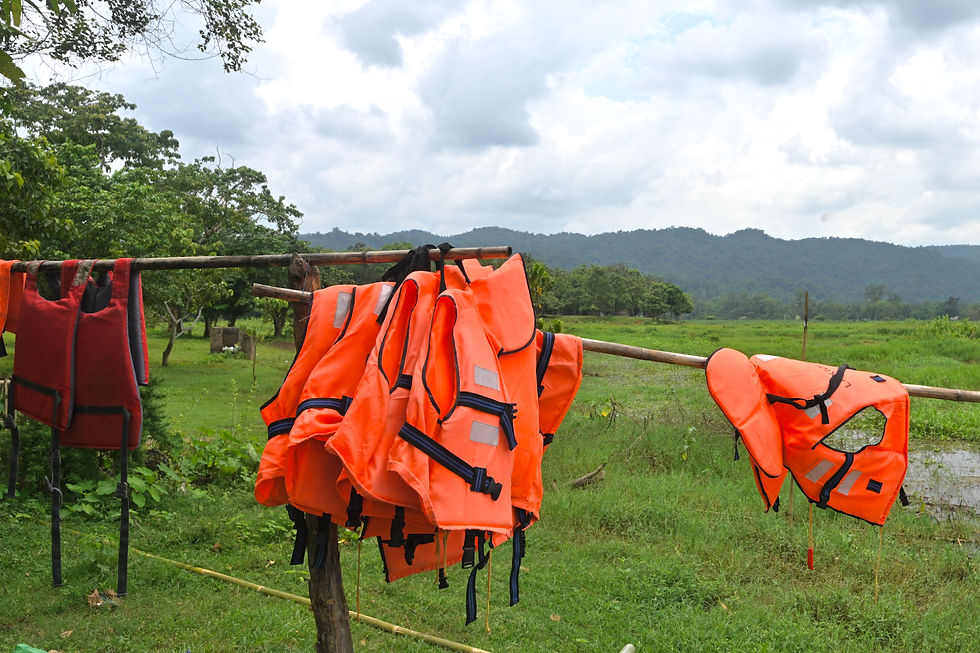
The road, like a scalpel, neatly slices the wilderness into two parts: Barduar Forest Reserve and Mayang Forest Reserve.
We step out of the car into another universe, an old world of tall trees, whispery leaves, scampering feet, clamorous birds, woodsy fragrances. Our stultified city sensoriums take a few moments to reconfigure.
We are driving out of Guwahati to somewhere.
Kamal Bezbaruah, the natty cab driver who came wearing the elephant-themed shirt his wife got him from Bangkok, has designed my day. In my mud-speckled cargoes and sneakers, I feel a little sheepish sitting next to him in his spanking new red car.
Our first stop is Dipor Bil, one of the largest freshwater Ramsar wetlands in Lower Assam. A train thunders by, hooting away some of the birds.
I get drawn in by a bright yellow Common Birdwing, scientifically known as the rather stylish Troidus helena cerebrus, which dashes away in seconds, and then by an orange Ditch Jewel which has been imposed with the equally inelegant scientific name of Brachythemis contaminate.
Someday someone should clean up this whimsical – frequently absurd and comical – convention of naming these sophisticated creatures.
We move towards Chandubi Lake, pausing every now and then to take pictures of whatever – which is pretty much everything – that I find fascinating. Kamal is a template of patience. Even if he disapproves, he not only smiles, he looks after my camera bag.
He stops briefly by the tea estates and then on the meandering Palashbari-Mirza-Loharghat-Rajapara-Chandupi Road, the one that is flanked by the two forest reserves, and educates me about the precious Sagwan.
When we reach Chandubi lake, we need a good brunch, which Daizi Rabha provides instantly: sprouts, boiled eggs, and Assam-style chickpea ghughni. We decline the garish orange pork chunks that are arranged outside her shack like ornamentation.
Her neighbouring competitor, a toothless gentleman – blame all the supari and choona and tambakhu that every other person in these parts chews constantly – makes mock sad faces at us. He offers us beer cans from his warm and watery icebox. I take a warm soda instead.
We ask Daizi for another serving, plus some rotis, before heading off into the lake. We are the only visitors this morning, and we get to choose our boat among several colourful ones. I am told that in December there is no place to park.
This 1000-acre freshwater lake, formed after an earthquake some 125 years ago in the foothills of the Garo range, is one of Assam’s favourite picnic spots.
She is bewitching.
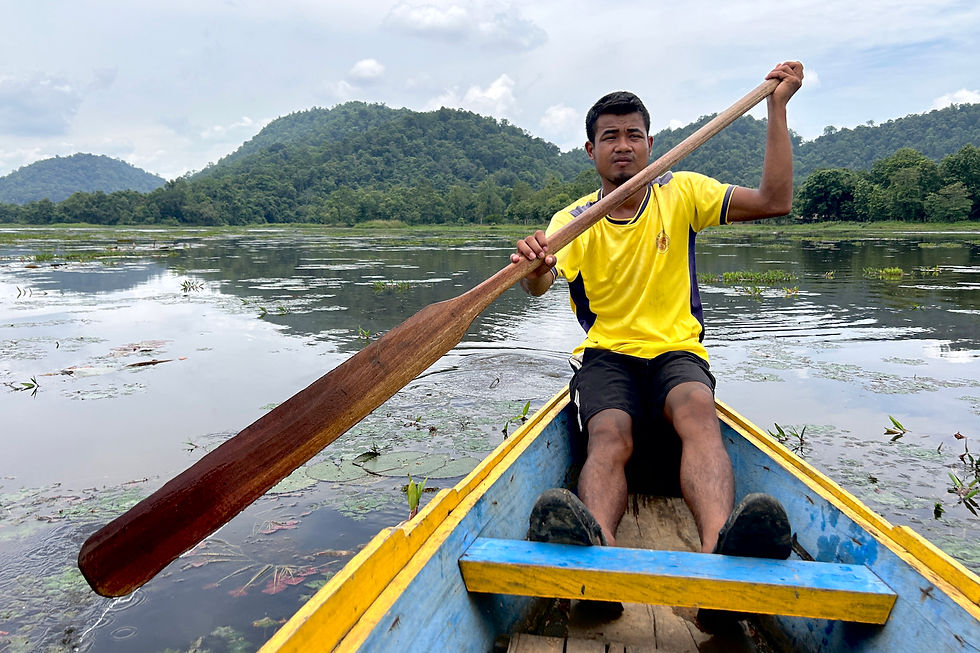
Kamal is bashful when I invite him, but finally agrees, and clearly relishes the 100-rupee, 20-minute ride.
Two women glide by in a traditional boat, the older one using her hands as paddle. They are out to catch dinner, our boatman tells us.
He sees me focusing on a Greater Bluewing and steers, not an easy task in the shallow waters overgrown with fleshy underwater stems. I stand to get an aerial shot and nearly topple the boat. He disciplines me gently.
I ask him how deep the water is.
“Two armlengths.”
Apparently, the lake has been consistently shrinking both in depth and acreage. It was once as deep as 26 feet. One hopes that this is nature playing out its inscrutable processes and not human encroachment that we now see everywhere.
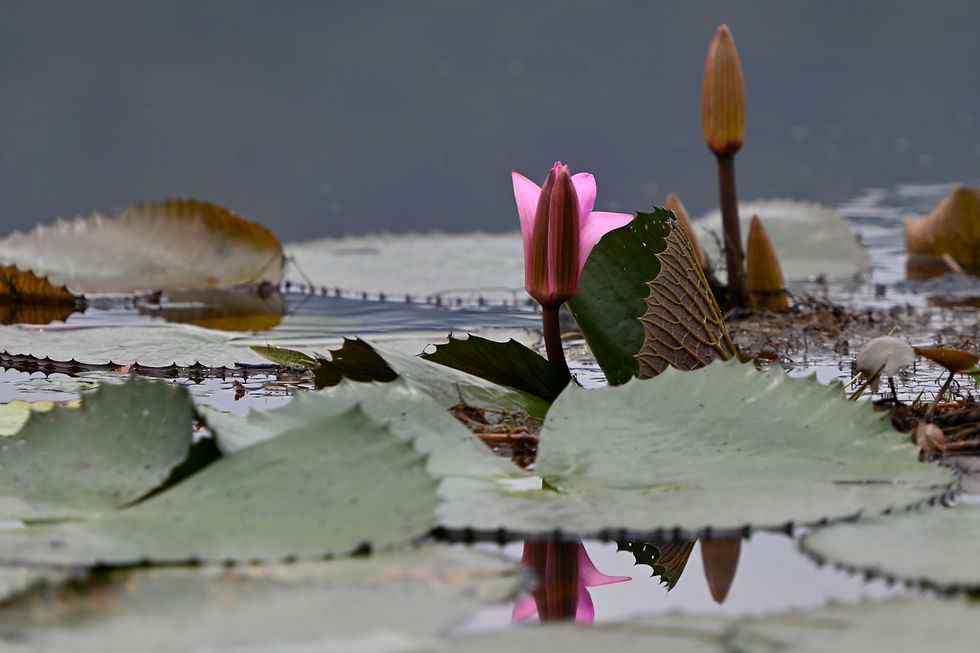
The boatman becomes my spotter, rowing to every dragonfly he sees, finally managing to get close to a yellow-black Variegated flutterer perched atop a pink bud.
In this enthusiastic pursuit of dragonflies, we have now far exceeded our designated minutes. He rows back.
We ask if we can keep the japi – the conical bamboo hat – they had given us. We are told we can’t.
We decide to come back for a second ride after lunch but, deprived of the japi, life feels different under the sun. We submit to a round of sweet pineapple that Daizi cuts with quick precision. The total bill for all the meals: Rs 250.
While packing to leave, highly envious of humans who don’t sweat like pigs, I ask if she has seen wild elephants in these parts. She shows a damaged part of her shack and tells us they were here the previous night. This, after all, is elephant corridor.
Are you scared?
“I have grown up watching them. But we are very careful, we keep our distance.”
On our way back, I ask Kamal if we can come another day, this time in the evening. “Sure, sir, we shall come again, but not in the evening.”
I use all the tricks I teach in the negotiation course, cajole and tempt and challenge, even try that hackneyed yet incontrovertible Indian argument: "Kamal ji, watching wild elephants from a distance in the evening is a much smaller risk than getting married."
Kamal ji laughs.
"True sir, very true. But we won't come here in the evening."




~*~