THE BIG ONE CONTINUED
Updated: Jan 13
March 2025




VI: Sonnets in the Sky
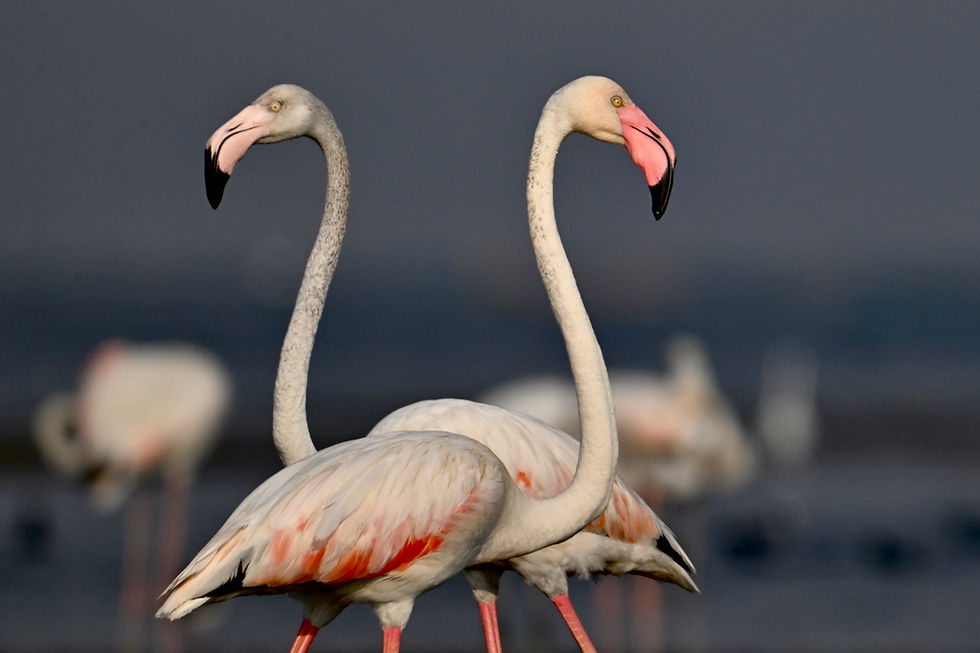
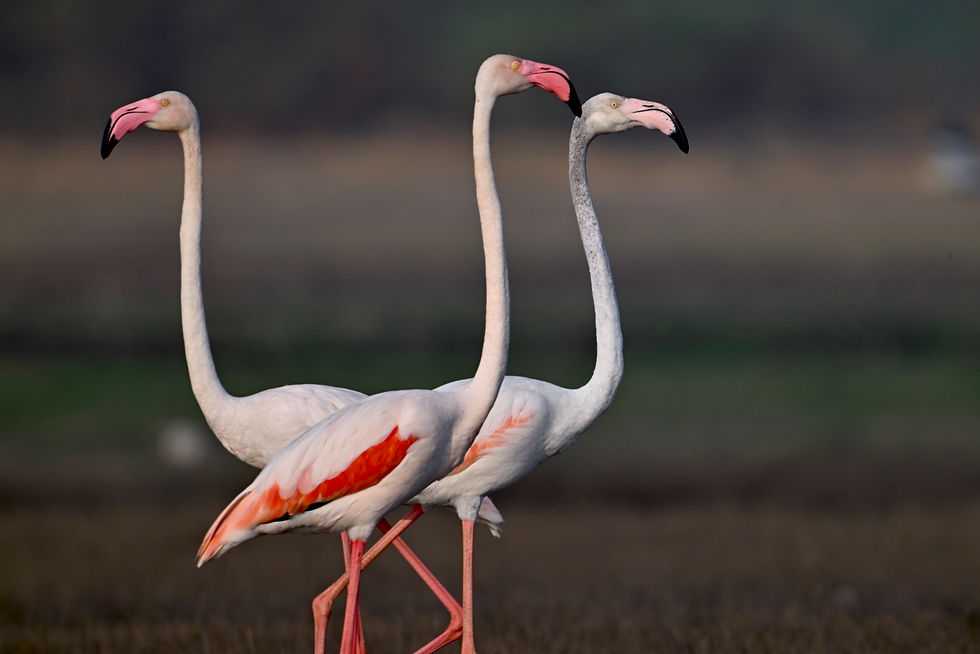
The pink is so shocking, so sparkling, it's as if thick wet emulsion is dripping from their bodies.
This operatic pageantry, this costume drama, is occurring early morning in a safe, shallow corner of Bhigwan lake with a cast of more than 500 leggy beauties.
They are strutting flamboyantly, their sinuous necks, curved beaks and long legs making them look sometimes like musical notes, sometimes like punctuation — question marks sitting on exclamations.
When they fly, they become flaming sonnets in the sky.
Flamingoes are born a drab and downy grey. As they mature and grow 'true feathers', they start acquiring pink from algae that contains carotenoids, the same pigment that turns carrots orange, capsicum yellow and tomatoes red.
We spend close to two hours gazing at them in awed silence.
Sachin whispers that it is time to head back. When I turn towards him, he is not on the boat. He is waist deep in water, holding the stern. He says he has been here all this while to keep the boat stable so I could shoot in peace.
He looks puzzled by my apology and gratitude. I am reminded that thank-you and sorry are ceremonial city constructs, incongruous in this ecosystem.
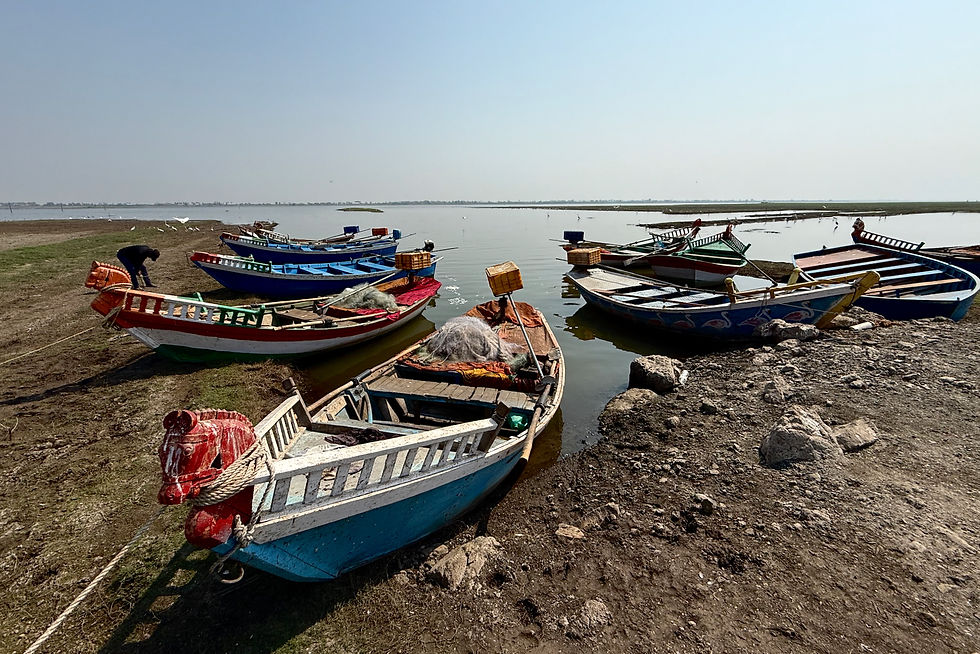
We make a stop on the way back at an island that’s swarming with romancing river terns — males feverishly wooing females with fresh fish.
A black-winged stilt is further along in the process, though all his mounting efforts end in a disaster that’s somewhere between a rom-com and a sex comedy. He folds his overlong legs, clambers clumsily on top with a great deal of effort, and then promptly slides to the ground. Each time.
Procreation is sweaty, slippery work, a clumsy convergence of chemistry, biology and physics.
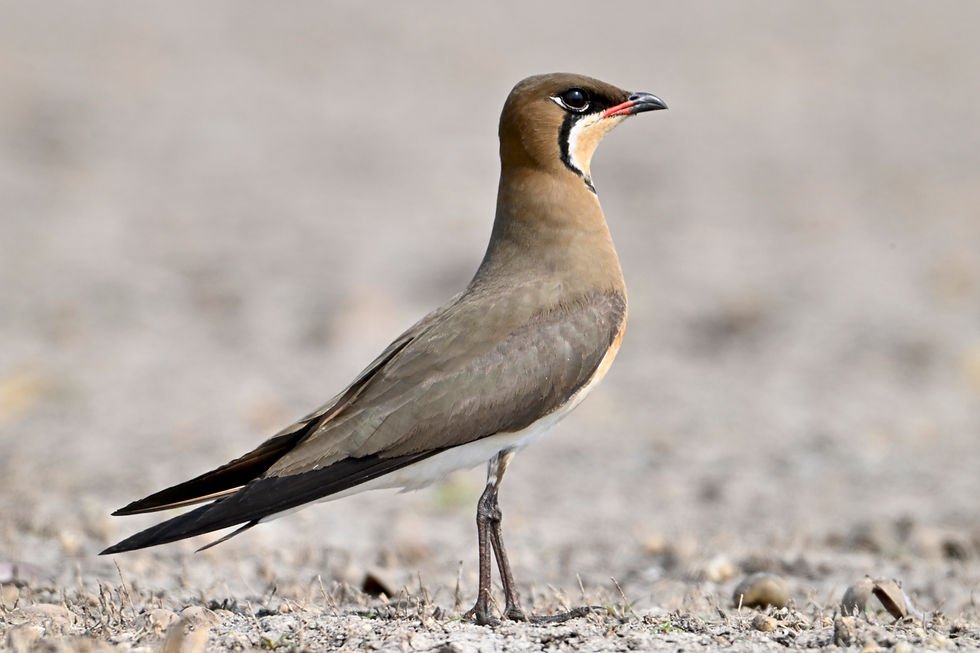
On this island, we get introduced to several varieties of avian amorousness. Sachin spots a pair of painted snipe hiding in the grass. The female of the species are polyandrous, mating with a few males before settling with the one that will incubate the eggs. Then we see the common ringed plover which are seasonally monogamous, just like flamingoes, forming pairs for one breeding season, an arrangement some humans might find deeply aspirational.
Even in the mythically monogamous pairings, like those among penguins and demoiselle cranes, divorce and extra-pair affairs are not uncommon. Unflinching fealty is an enticing myth, and a stubborn one.
While we are entranced by the wonders that are occurring in this watery immenseness, this imposing amphitheatre, Sachin doesn’t seem to be much moved by any of the sights. He is absorbed in keeping the boat stable, giving me a suitable angle to the right sight with the right light.
Fisherfolk, forest-dwellers, and farmers don’t remark on the gorgeousness of a sunrise. They don’t have the surplus — of emotion, energy, time, vocabulary. They are simply another entity here keeping rhythm with the forces of nature.
We don’t stay long enough to know if the stilt decided to persevere or abstain, how many male terns succeeded in wooing their females, or if more flamingoes joined the courtship march. We are all hungry and tired.
After a big brunch and siesta, we set out again early evening. Sachin suggests we walk to the marina.
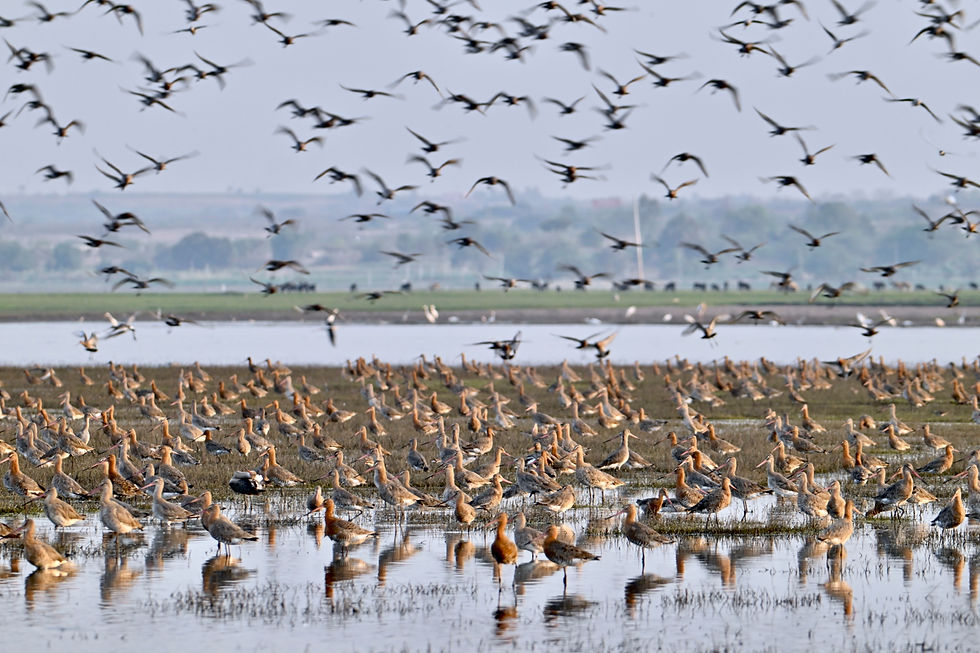
When we get there, we see on one side a flock of greater flamingoes and Eurasian spoonbills and on the other side a vast carpet of black-tailed godwits.
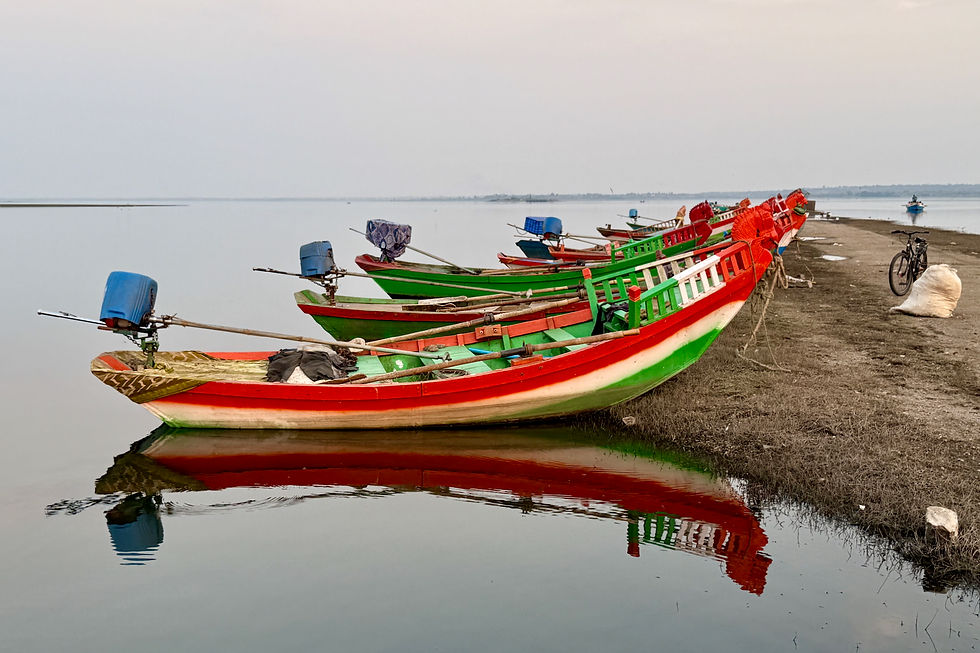
A painted stork meanders onto the marina, casually loafs around the boats like a purposeless retiree, and then waddles to a spot where a few black-winged stilts and grey herons are gathered for supper. Over our heads, flocks upon flocks of Indian cormorants are returning to their roosting sites.
Here in Bhigwan you don’t have to go seeking a moment. The moment materialises on its own and taps you on your shoulder. There is such an abundance of life, of water, in this universe, it induces a trance, a foggy forgetfulness. We become the lotos eaters.
This dusking land of countless creatures is surprisingly soundless.
The tinkling of tiny bells provide a soothing background symphony as the goatherds and cowherds follow their wards over the rutted paths, the paths they take every day.
Nothing evokes this scene better than that dreamy Hindi phrase: Godhuli bela.





VII: The Dog That’s a Cat
We are not sure why we had to wake up at an unearthly hour only to end up in a wasteland.
Sachin has parked the car in a desolate patch deep in the Kadbanwadi grasslands and asked us to sit quietly and keep gawking at a barren rock.
He has already established himself as a consummate naturalist, boatman and driver, and now he seems to be unravelling his mastery of transcendental meditation — nirvana in nothingness.
The only sound here is of the occasional cheep-cheep of an Indian robin, who too seems perplexed by our presence, and the sonorous snoring of one of our associates. He sounds completely transcended.
I am about to cross over too when the rock stirs. Something is about to happen.
And something does: four striped hyenas, a mother with her three cubs. Only when they yawn and stretch can one make them out clearly, so completely melded they are with the rock.
We are transfixed. Sachin smiles at us like an indulgent parent watching the child unwrap a surprise gift. “Now some activity will happen.”
Unmindful of our presence, the hyena family starts thawing in the morning sun. One sibling is particularly mischievous, as one sibling always is, gnawing at the toes and ears of the other two, who really just want to go back to bed.
The exhausted mother watches over them for a few minutes and then ambles off to the watering hole. After a good drink, she lies there for her own mid-morning snooze.
The father, says Sachin, is likely still in the hole somewhere in the scrubs.
Hyenas look like exotic dogs: beige coat, long ears, black mane, sleek frame, bushy tail. Ancestrally, I discover later, they are more closely related to cats, more feline than canine. Both belong to the suborder feliformia which comprises ‘cat-like’ carnivores including mongoose.
Either evolution is freakish, or the human mind is. Perhaps both are.





VIII: Landlords Are Monkeys
These might be some of the most disciplined, most courteous primates on the planet. When you approach the abandoned well, they tumble out of it in an orderly fashion and wait almost in a queue for the rotis.
The bonnet macaques, whose hairdo resembles mine, take the rotis from your hands with gratitude and caution. The caution is for the solitary gray langur that hovers around the well when it’s hungry.
The monkeys are so revered here as descendants of Hanuman, they have some of the Shirsuphal land written in their name, says Sachin. We are yet to see the ownership deed, but there’s no reason to doubt. In Upla village, also in Maharashtra, 32 acres of land is indeed officially registered to monkeys.
One of the bonnets, having established that it’s not a weapon, begins to get a little too curious about my camera. A few tinier ones are practising to be trapeze artists inside the well, hanging upside down, pulling someone’s tail, jumping on unsuspecting brethren.
In a mere 2% of DNA difference with apes, a tad more with monkeys, humans lost out on many useful skills. (Like Richard Roxburgh in Rake, I too think that my percentage chimp DNA is higher than others.)
How convenient it would have been for us to have had the agility of monkeys, if we could use our feet as hands, had prehensile tails.
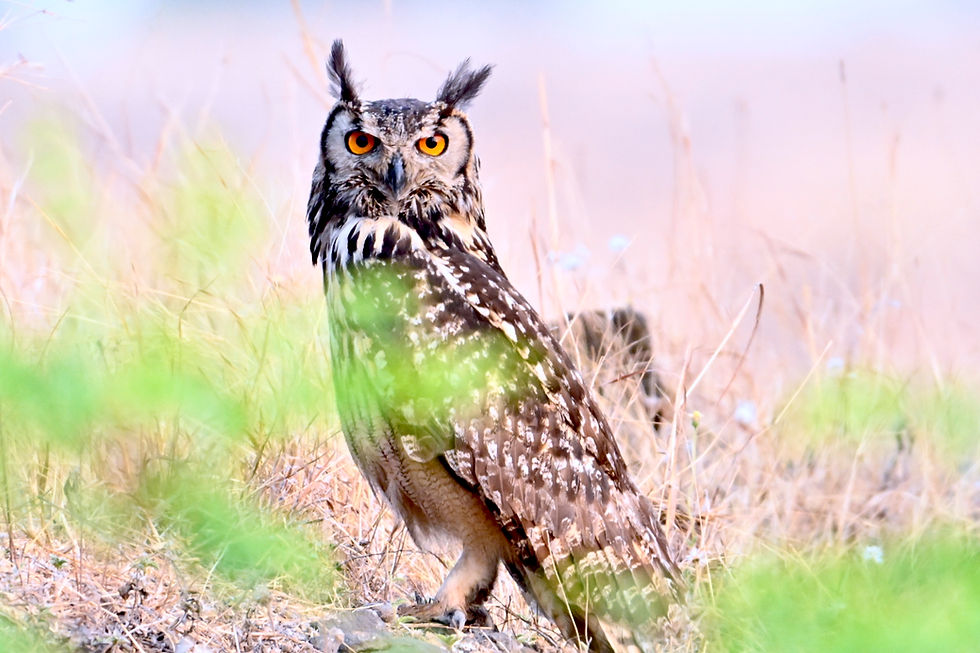
We drive on into the grasslands again to watch the Indian eagle-owl, the largest owl species found in India, a raptor which looks even more formidable from its distinctive horns. The pair lives with its two chicks beside a canal.
The chicks look like fluffy toys with big, blazing eyes which are as tangerine as midday suns. They are crouched among rocks in the understory, hiding from pesky crows.
While the eagle-owl parents are self-contained, calmly ignoring the crows, the spotted owlets which live not far in a cranny give intense, scrutinising looks.
Sitting perched on the patio of their hollow, they squint at me with the superciliousness of a grammarian. They are either finding faults in my character or are about to utter something insulting about the entire human species.
It’s of course Sachin who has spotted all these camouflaged creatures, including the snake that is up a tree trying to squeeze into the hole where the rose-ringed parakeets have their chicks, and the sandgrouse which looks like an overfed sand-coloured pigeon. It sits parked in the middle of the pathway with the air of a presumptuous politician.
I learn later that sandgrouse have spongy wings which can soak up water. When they fly back from a waterbody, their chicks drink from the soggy feathers.
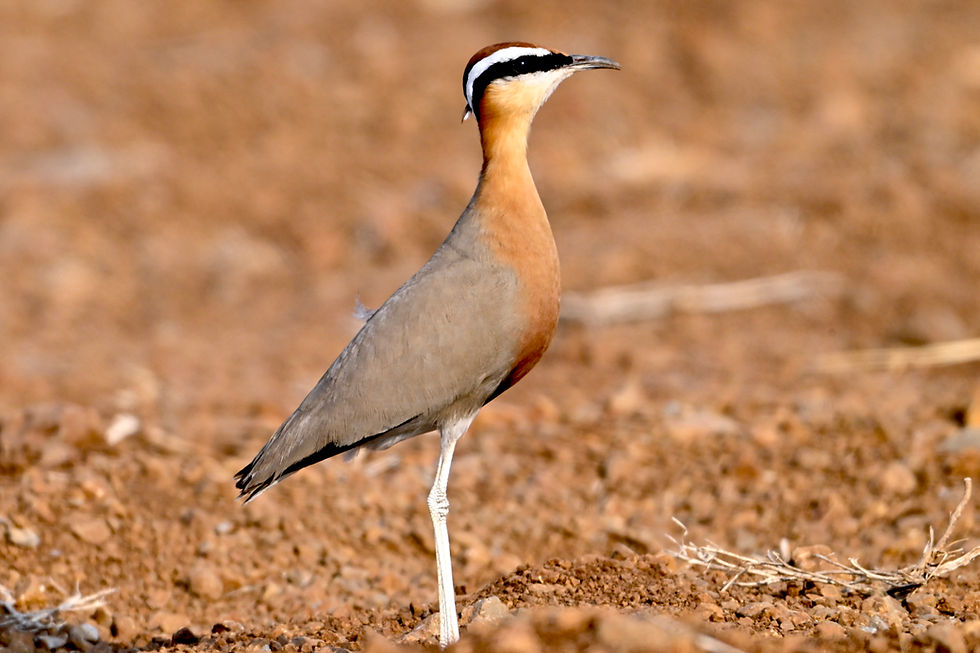
As we wind back from the grasslands, we stop for a few minutes to watch a kestrel hovering like a dragonfly, a shy chinkara with horns that seem to have been fashioned by a potter, and a group of Indian coursers which either stand upright with statesmanlike bearing or skitter around like animated cartoon characters. The courser gets its name from cursor, Latin for runner.
The last stop of the morning is at a hillside where dozens of unusually large black kites are gathered at a dump for poultry waste. This is the kind of corridor where human habitation starts blurring into the wilderness, a space that in many parts of the planet is quickly going or already gone.






IX: Endings & Beginnings
One of the goatherds, a wiry old lady who is out in the sun all day, has invited us to lunch. Her directions are lucid: two turns away from the lake and then a tinny shanty next to a mango tree.
It is easy to find her place.
Her daughter-in-law, a middle-aged woman in thick toe rings and anklets, has been waiting. She invites us to sit on the cloth mats on the earthen floor, and immediately begins preparing rotis.
The kitchen is a small, makeshift shed put together from corrugated tin sheets and is crammed with a firewood clay stove and several aluminium utensils, all of them misshapen and lustrous. They have been washed and polished with the thoroughness granted to special occasions.
The large water pots have seen the most crashes, their once curvy sides full of dents and dimples. They too are sparkling.
The daughter-in-law’s daughter-in-law, a young woman no more than 20, joins with her year-old son who, like his grandmother, also wears thick silvery anklets.
Over the lavish lunch of tilapia fry, tilapia curry, dal, vegetable curry, salad, Rekha tells us her story in a halting mix of English and Hindi. She wanted to study but had to drop out of school to get married. She wants to work but she has to take care of her little boy and the kitchen.
Can she complete her studies online?
“I don’t have a phone. I am not allowed one here …”
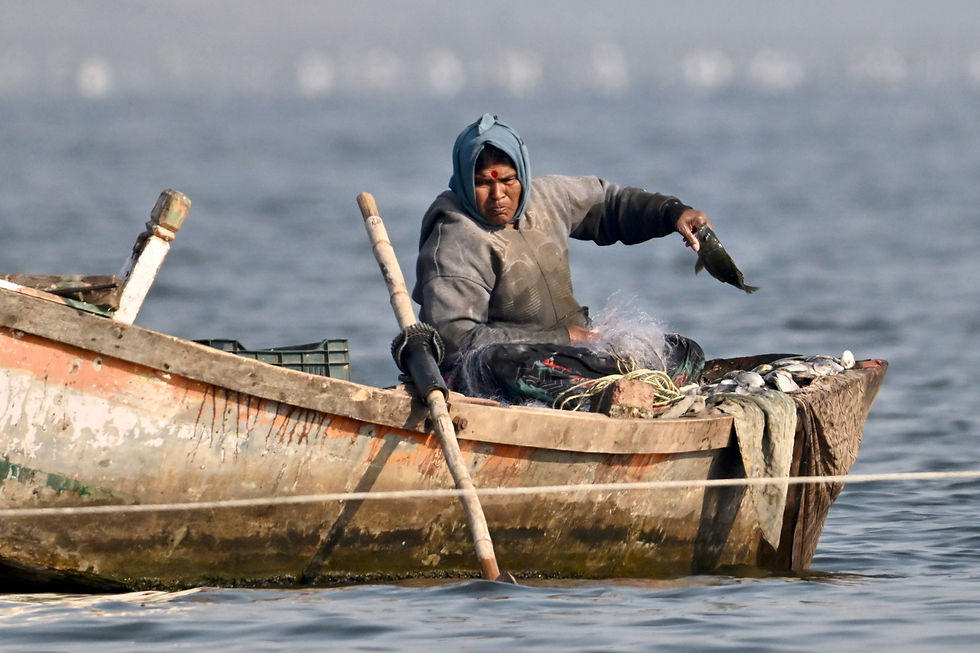
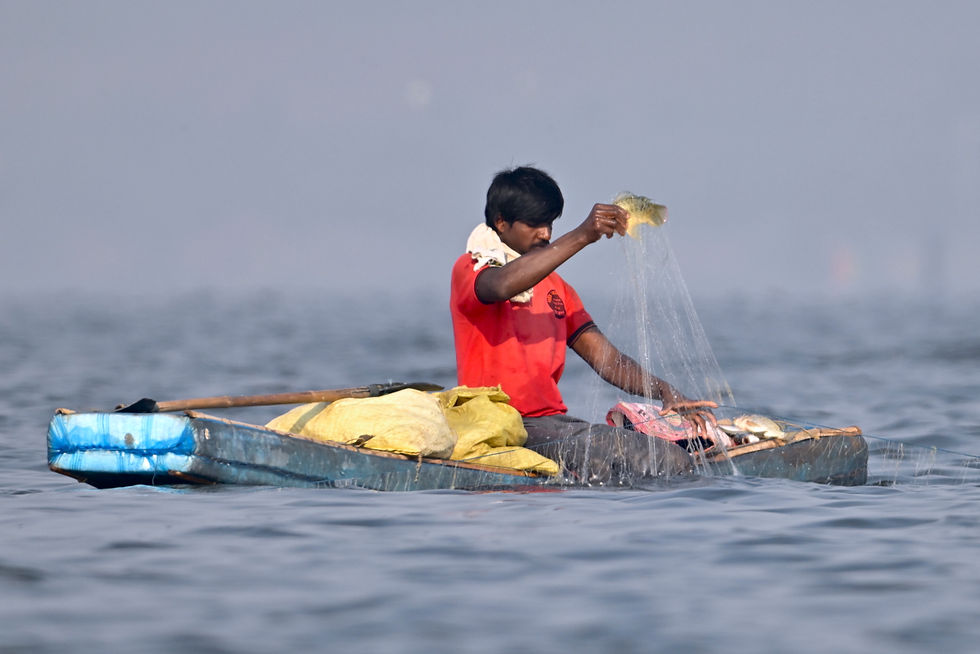
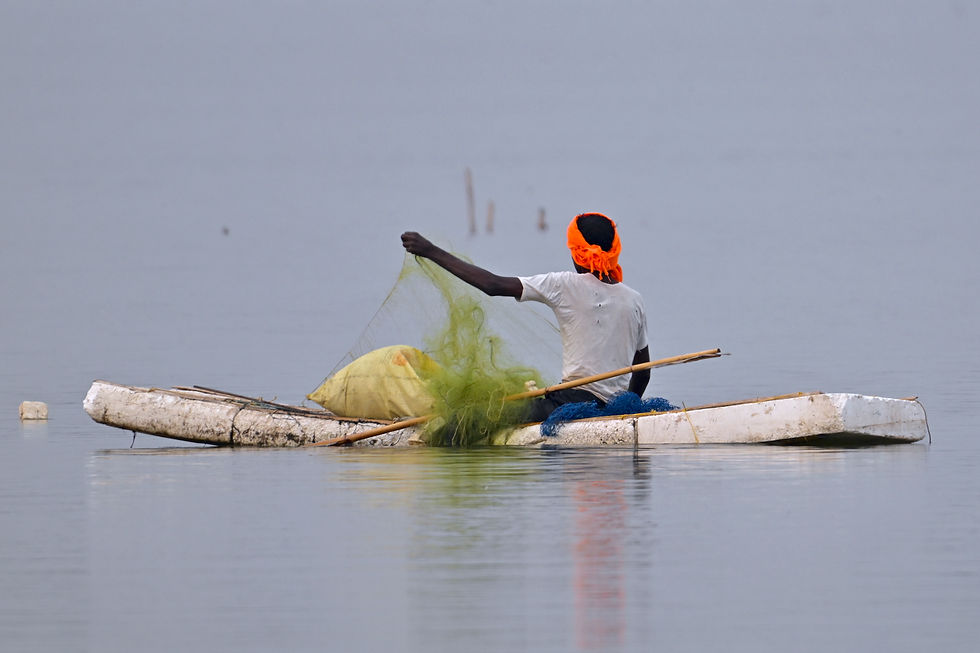
The mother-in-law interrupts to tell us that she caught the fish herself this morning. “I have to go out every morning to catch fish.” She has one of those styrofoam boats.
Rekha is about to say something when her husband arrives. Both the ladies instantly get busy serving him lunch.
On the short way home, we see two old goatherd women, one of them wearing a tattered sari and a frayed denim hat. We stop for a small, sunny exchange and they grin when they see their pictures on the camera screen.
Next morning, we are up early to pack and leave. The drive back home will be about 10 hours.
When we say a quick goodbye to Popat ji and Payal, they ask us when we are coming again and tell us that they want to give us something. Sackfuls of onion, garlic and peanut start getting loaded into the boot, till there is no room left for more.
Payal laughs at the suggestion of payment, Popat ji simply ignores it.
The moment we have finished packing ourselves into the car, Jhakkhi appears from somewhere and assumes that he is invited. Wagging his tail in vigorous anticipation, he tries to hop in.
There’s a thin line, or maybe none, between devotion and desperation.
I step out and try a tiny conversation with him to explain the situation, but nothing works. We have to quickly shut the doors and drive off, hoping he would understand.
He doesn’t. He starts running after the car.
I close my eyes hard, wishing this sight away, praying that he stops, turns back, and goes home, though I am not sure if he has found one yet. In a way, he reminds me of me.
I request the driver to go faster. I am in a hurry to get away from his emotions — and mine.
When I dare to open my eyes after a minute, our banana-loving, papaya-hating vagrant is still there, still running. Between us is a stretch of throbbing, numbing silence.
This feels like the climactic scene from a tragicomic movie about love and longing, about a tawny little protagonist chasing a glorious new beginning, about how terrifyingly beautiful life can sometimes be.
Soon there will be a murmur of memories, some mirthful and some melancholic, a wistful smile, a pricking conscience, and the possibility — always that possibility — that within the epilogue of this movie is the prologue of the next. Time, that ultimate illusionist, that compulsive prankster, laughs at us for believing in tidy beginnings and endings.
As we take a bend, I look back once more, hoping that he is gone.
Jhakkhi is sitting in the middle of the road, panting hard, his incredulous eyes still fixed in our direction. He can’t make sense of what just happened.
Neither can I.
~*~