THE BIG ONE
Updated: Sep 25, 2025
March 2025


I: A Whimsical Vagrant
Jhakkhi shows no signs of letting go. In fact, he is picking up pace.
Bolting down a thinnish road flanked by swaying stalks of sugarcane, he seems possessed by some primeval force. He is either fleeing from something or fleeing to someone.
There’s a tinge of bittersweet in this scene, an allegorical synopsis of our own journey of the past few days. Every other moment has been both splendid and sombre, light and laden, fraught and funny.
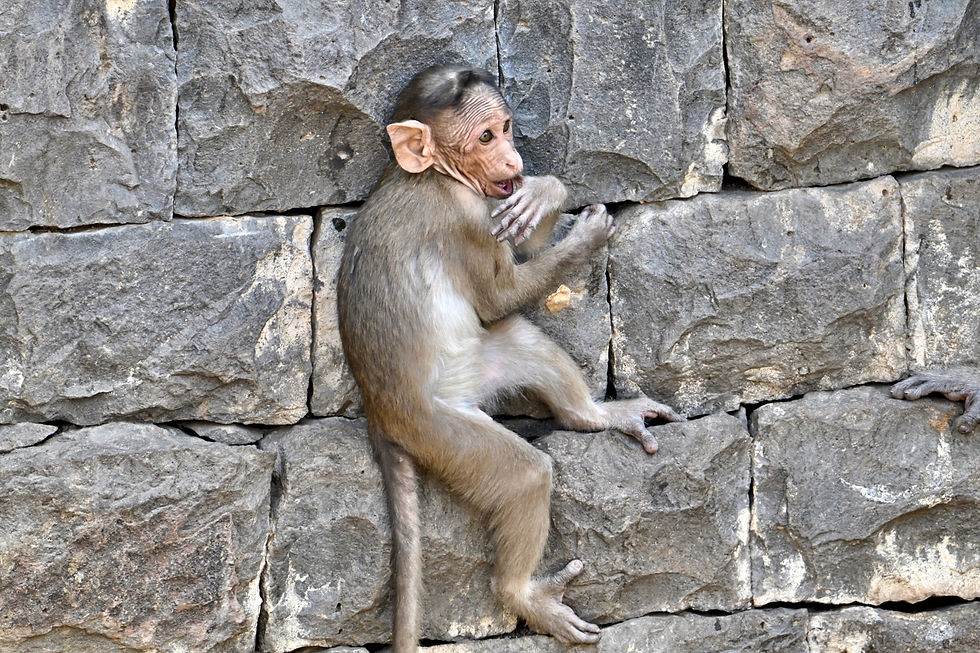
Soon after we had arrived at the lakeside village, Jhakkhi had dashed in with the familiarity and fondness of a friend seeing us after years.
He greets us so enthusiastically, with so much affection, it topples us like a tremendous hug.
He is offered, more out of courtesy than kinship, a banana. He devours it immediately, and then the three more that remain. He is then offered a slice of papaya which he summarily rejects. He hops onto the dining table, unmindful of the fact that he is caked up to his knee in sticky mud.
His sense of entitlement, of owning the space, is impressive.
This eccentric, unhinged juvenile might be borderline delinquent, but he certainly has presence. We are surprised when Sachin, the resident boatman and guide, says that he has never seen Jhakkhi before.
Perhaps there is some truth to rebirth and reincarnation, some truth to the unfinished stories of our past lives, stories of unreturned love and abandoned associations.
Or perhaps this is how all bonds are formed: randomly, without reason. One of the biggest afflictions of modern times is the need to see interaction as calculated barter, relationships as an exercise in emotional bookkeeping.
Jhakkhi is beyond all this arithmetic. He doesn’t care. He has arbitrarily decided to insert himself into our lives, disregard all attempts at rejection, and he has decided to stay.
We don’t know where he vanishes at night, what his other life is like, but he is by our side all day, even if it means hilarious attempts to get onto The Bootle-Bumtrinket.
When he sees us setting sail, he abandons his chase of waterbirds and starts running towards us. In his single-minded pursuit, he doesn’t notice when the shore ends. He ends up in the lake.
Jhakkhi's doggedness jogs a fond memory concerning my older, tinier sister. She was once so purposeful about handing me my phone while I was in a swimming pool, she got up from her lounge chair, strode over, and then instantly disappeared — like the vanishing act in a magic show.
All one heard was a soft plop.
After nearly drowning in four feet of water, she surfaced after a few seconds, gulping and gasping. Despite her hydrophobia, she proceeded with exemplary determination to hand me the phone.
She has always been the most focused of the siblings, letting nothing stand in her way — come hell, high water, swimming pool.




II: Our Very Own Bootle
Our two associates, J the chef and N the chauffeur, do not see why I am fussing over Sachin, who has been rowing us on Bhigwan lake for more than an hour. I have been feeling guilty. The boat does have a motor but it’s thunderous engine scares the birds away. I had asked Sachin if we could do without it.
J and N decide that rowing a boat is ridiculously simple. They take over.
They first row individually. The boat groans without moving, sighing in despair at the feeble and futile attempts. It’s dusk and it wants to get home before dark.
Then the two come upon this pioneering idea that this one-oarsman boat should be rowed by two together. Each picks an oar, and they begin with the smugness of pathbreaking innovators.
Galvanised by the remarkable progress they have suddenly begun making, they row more gleefully and for a good ten minutes before we get the sinking feeling that we are still nowhere closer to shore, which is really not that far away.
After much squinting at the starboard and port side and trying to locate defects in the boat and in each other, they finally discover that they have been rowing in circles.
This is reminiscent of that scene in My Family and Other Animals where Gerald Durrell and his family, including the dogs, take their inaugural ride in their homespun boat, The Bootle-Bumtrinket.
There’s something remarkably inspiring about the derrière, which for some quaint reason has acquired quite a collection of b-words: bum, bottom, booty, buttock, butt, behind. Is this something to do with the contours of the letter B?
For now, we shall leave these curiosities behind, and get back on the boat, which has been going round and round — such a bummer — thanks to the synchronous rowing by J and N.
This adventure also brings back Uncle Podger, the one who more than a hundred years ago famously tried to hang a picture in Jerome K Jerome’s Three Men in a Boat (To Say Nothing of the Dog).


III: A Treacherous Treasure
There are several aluminium boats like ours in the water, most of them carrying tourists, and dozens of ingenious single-seater rafts, the size of yoga mats. They are sprinkled all over, bobbing lightly on the gentle waves.
This unassuming and unusual contraption is made of blocks of styrofoam, or thermocol, and is a lifeline for villages that line the Bhigwan wetland.
The men and women all come here for a seemingly inexhaustible treasure: tilapia.
Brought into India decades ago, the Mozambique tilapia and the Nile tilapia have become ubiquitous, thriving in all kinds of water. They are now so universal, they have the double distinction of being called ‘aquatic chicken’ and of being on IUCN’s list of ‘World’s Worst Alien Invasive Species’.
(Another species could have easily walked away with that title. They were disqualified because they were the jury.)
Tilapia, like water hyacinth and lantana, is invasive and proliferative. All three species are seen as a threat to native ecosystems.
Two characteristics make tilapia particularly hardy: tilapia are asynchronous, all-season breeders (just like humans); and the young, ominously called ‘fry’ for the fate that awaits them, stay safely in the mother’s mouth for two weeks.
On every styrofoam raft is a fisher who straddles the middle of this flimsy, floaty watercraft, feet hanging loose in water. They carry two plastic bags, one to hold the net and the other for the catch. To paddle, they use an unfussy oar: a wooden pole with a utensil, often a large metal dining plate, attached to the end.
Innovativeness is a fancy corporate buzzword for what occurs in this country every day everywhere. It’s survival. The more limited our resources, the more imaginative we become.
The darkening sky is streaked with burnished orange, most boats are already anchored, and our two aspiring oarsmen have finally yielded to Sachin.
As we get close to shore, we see a restless silhouette. Jhakkhi.
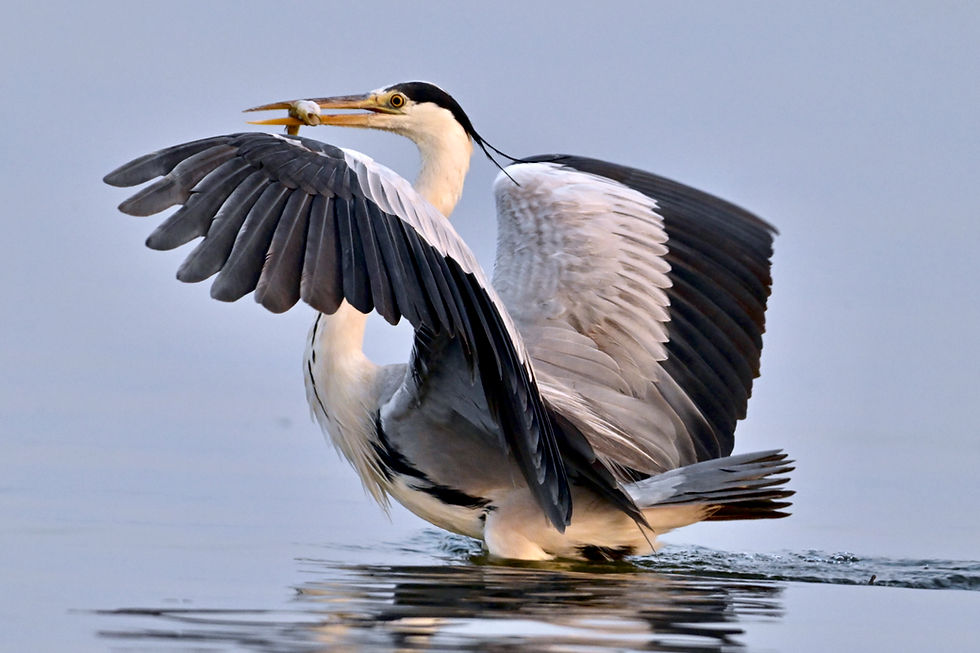
Not too far from him is a grey heron struggling to swallow a large tilapia which is still thrashing, a sight that’s beginning to get commonplace here.
Out in the wilderness, life and death are so tightly entangled, they become a singular seamless entity. Only we citified humans seem to make a big drama of life, a bigger drama of death. We seem to have grown an instinct for actorly exaggerations.
We should be grateful for the frequent comic respites we keep inventing, like political debates, like rowing in circles.




IV: Sweet and Sturdy as Sugarcane
We decide to stop at Popat ji’s, who is walking back home after another busy workday, examining a freshly plucked onion.
It’s Sunday, but then there are no weekends in the world of farmers, forest-dwellers and fisherfolk. There is no notion of work-life balance, no victims of vocabulary.
His borderless residential compound is an assortment of scattered dwellings for humans, animals, and harvest.
Payal, his college-going granddaughter, waves us a warm welcome from her verandah and prepares to join us in his office, his white charpoy that sits in the open amidst more than 50 animals: cows and buffaloes ruminating; goats and sheep grazing and browsing, occasionally nipping at my shirt; an insecure rooster constantly lecturing his four wives; a tall bull with his horns painted red; a duck watching over its ducklings; and a guard dog who lunges lustily at all strangers.
The air is so heady with the odour of dung and droppings — it has a touch of petrichor — that thoughts start wafting towards the fascinating world of animal excrement.
Here are a few stool samples: the American bison’s dung is called meadow muffin; batshit is called guano and, being high in nitrogen, was once used to make gunpowder; sloths typically have to poop only once a week, a feature that makes humans envious; hippos engage in dung-showering, using their tails as poop propellers; crocodile poop was once used as spermicide; baby koalas, called joeys, eat their mother’s pap, a special type of probiotic poop; and then of course there’s that ultimate aficionado, the dung beetle.
Cow dung stands in a league of its own. It can be used as manure, pest repellant, wall plaster, and even antiseptic medicine. Dried cowpats, of which there are several hillocks here, is a reliable source of fuel in much of rural India.
Popat ji hands me the onion as a gift and starts talking, softly and sparsely, about his several acres of sugarcane, potato, onion and peanuts. Payal arrives in time to begin the live Marathi-Hindi translation. There isn’t much for her to do, for he is man more of deed than discourse.
His dress code is consistent: white dhoti, white kurta, black chappals, white Gandhi topi, all of which are mottled with dust. He carries a thick wooden staff which he uses to support himself and to steward his cattle.
Between him and his livestock, this universe is remarkably black and white on brown.
The gentleman Payal calls ‘nana’, an elderly man who squats in the shadows with his cherished possession, a clay chillum, dissolves into his environment so seamlessly, I spot him only when smoke billows from between the goats. He too wears a white dhoti and a white topi, now dark and grimy with overuse, way past their age of retirement.
I sense a surge within, an urge to belong. I seek an extended stay. Do you think I could get a long-term rental in this village? I ask Payal.
“No need,” says Payal, “you stay with us,” and turns to her grandfather for confirmation. Mr Ganpat Popat Pansare just smiles his warm, benign smile, the deep furrows on his forehead running deeper.
These furrows, like those in the soil, hold untold tales of the tumult that this stoical, weatherbeaten farmer has endured in his 85 years of existence.
As we take our leave of our newfound friends — we first bumped into each other only the previous day — Jhakkhi emerges from underneath the car.
We didn’t know that he had been waiting.


V: A Man of His Bird
The night is beginning to peel off slowly, the air is stippled with the chittering of waking birds, Popat ji’s rooster is announcing as piercingly as he can the dawn of another day.
Sachin arrives dot on time, makes us coffee, and leads ahead in his motorcycle to his boat, which is half a kilometre away. The photographer is offered a prime spot on the planks and other boats are poked out of the way, scattering the herons and ibises.
On a map, the Bhigwan wetland looks like a spiky dragon-snake which stretches 40 kilometres head to tail. From a boat, it looks like a wraparound balcony which opens to an endless sheet of silver-grey fabric frolicking in the breeze.
Bhigwan is a big one.
In it are hundreds of birds, thousands of fish, only a handful of humans. Absolute blessedness.
Several wooden and aluminium boats are already out fishing, and so are the styrofoam rafts.
All along the ride, little terns keep diving next to our boat to take advantage of the churn. One male keeps dashing back to shore to feed a female in the hope that she will appreciate the gesture enough to agree to beget children with him.
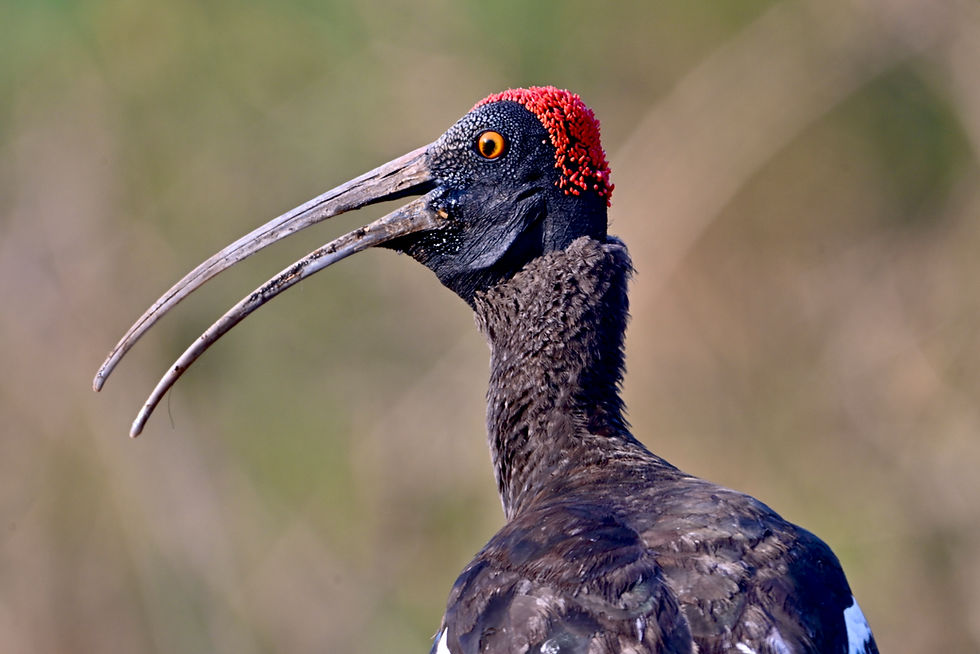
The libidinal lives of birds can be laborious: Some like flamingoes prance in a group; some like peacocks dance solo; Baya weavers build complex housing, often only to get rejected by picky females — love’s labour’s lost; and then there are these little terns who direct their entreaties to their prospective partner’s palates.
Desire expresses itself in many flavours, each promoting either charm or competence.
We get distracted from the terns when something causes black smoke to rise from the water, smoke that moves in a smooth sine wave that is made up of tiny darkish dots. “Black-tailed godwit,” says Sachin. I ask if these could be a murmuration of starlings.
“The rosy starlings are there,” he says, pointing to the sky. “They don’t fly in this formation and so close to water.”
When we get near where the black smoke has settled, we see hundreds of godwits along the shoreline poking their long beaks into the shallow waters.
Sachin, who is turning out be a man of few words and many birds, suddenly kills the engine, and starts rowing. He asks me to take my shooting position. I wedge myself between two planks and snuggle in the hull of the boat.
This is pre-courting season, and the flamingoes have congregated in a tight group, aptly called a flamboyance. One of them begins rehearsing with the signature head-flagging and wing-saluting moves. A few adults join in a lockstep march immediately, but most are not aroused enough yet. They are fully immersed in their napping or foraging.
Sleep. Eat. Seduce.
~*~