GUMLA TO GOA: 'HAPPY JOURNEY'
- Jan 22, 2025
- 3 min read
Updated: Sep 25, 2025
January, 2025


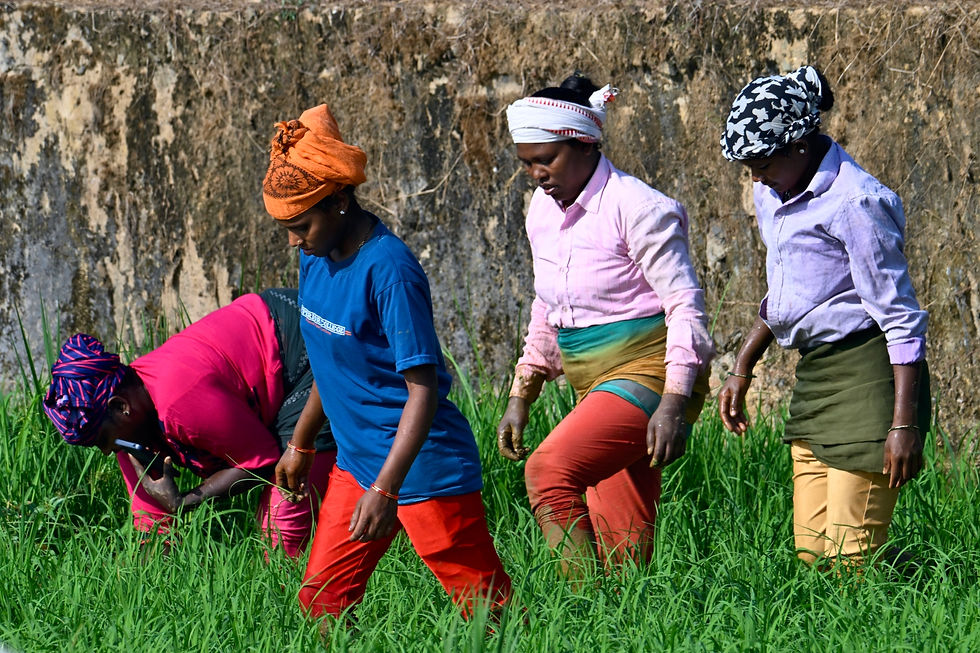
In this immense ocean of green, it’s a flash of flaming pink that catches the eye first, and then the blue and yellow and orange and red - young women in radiant leggings, shirts, wraparounds and turbans.
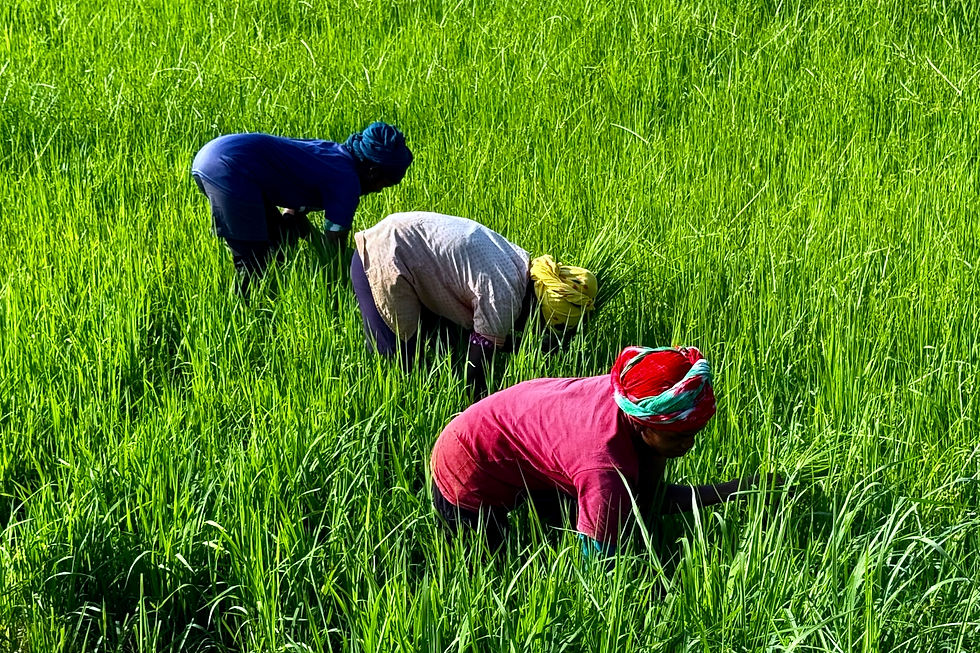
Out here in this untouristed corner in Goa, far far away from their home in Gumla, Jharkhand, under a morning sun that’s whispery yet, these farmhands are gathered in little clumps to weed out wild grass from the paddy fields.
They work silently in tandem on one patch and then squelch off to the next, their hands and feet splattered with soil. There’s little room for casual conversation. Occasionally, there’s a curious look at the camera, a smile, even a welcoming wave of hand — the kind of humanness that peels off the unfeelingness and otherness that accompanies typecasting labels: labourer, worker, ‘those people’.
Over time, in between all the bending and plucking and bundling, Sumitra Kumari, themed in blue, begins to get a little sociable.
She tells us that they live across from the fields and go to Gumla occasionally.
Has she attended school?
’Yes, matriculation.’
She must be among a few. As anyone from those parts will tell you, Gumla — name apparently derived from gau-mela or cow fair — is one of those rural specks where healthcare and education can be an aberration.
Here as migrant labourers, they get paid their daily wages at the end of every workday. They send money home regularly for the ‘larger family’.
In a matter of minutes, the sun has quietly snuck up on us and is suddenly screaming down. The ‘patrao’, or boss, arrives on a motorcycle, bearing instructions and snacks. In the evening, he gets them tea.
An assortment of lunch bags and slippers lie on the dirt track that cleaves the farm neatly into two. They are as colourful as the women, several of whom have a phone in their hands or pockets. One carries orange soda bottles slung in a yellow plastic bag.




A Miscellany of Migrants
The evening feels almost as busy as the morning.
Biggish flocks of northern pintail, whistling duck and black-winged stilt, and smallish gatherings of purple swamphen, northern shoveler, ruddy shelduck, and black-headed ibis wallow or wade in the verdant fields.
Black kites, which frequently terrify the smaller birds with their whinnying calls and sudden swoops, have congregated in the middle. There are dozens more dotting the electric poles.
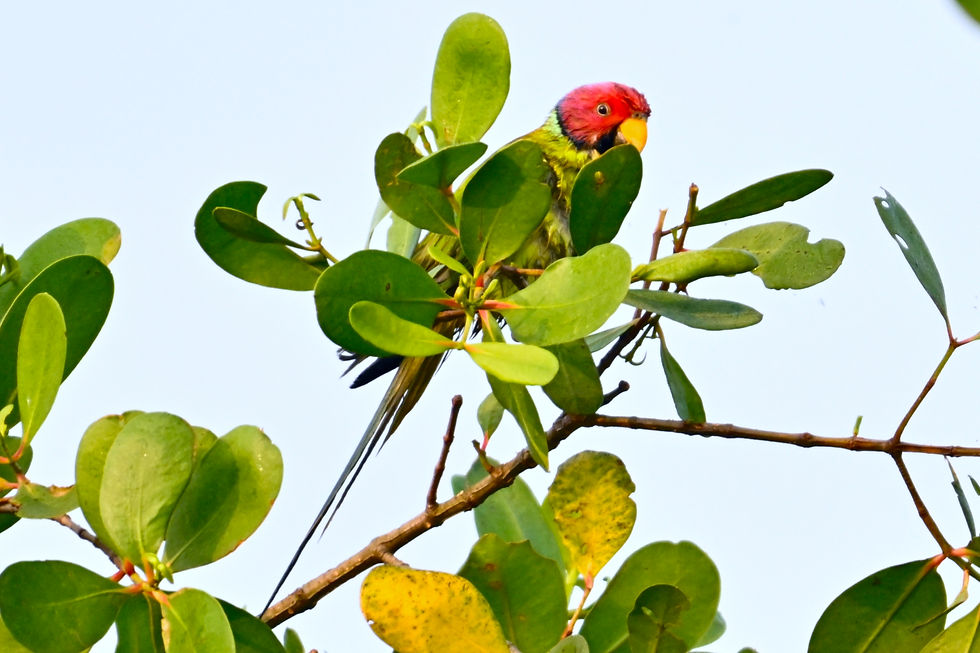
Other birds operate solitarily or in scattered pairs, busy preening, plucking, preying: Paddyfield pipit, chestnut-tailed starling, Eurasian hoopoe, common snipe, ashy drongo, barn swallow, Indian roller, red-wattled lapwing, long-tailed shrike, ashy prinia, grey heron, plum-headed parakeet (the female has a grey head), purple heron, common greenshank, Siberian stonechat.
The avian abundance tells of the lushness of this ecosystem: water, food, weather, quietness.
A female Asain koel is hopping from one branch to another picking up unripe green cherries from a tree while its male partner calmly observes.
The tired sun is beginning to sink, lighting up listless clouds in pink.
A family in shorts and tees takes a casual stroll on the dirt path, three young men zip by on a motorcycle, another family in frippery finery arranges itself for a picture, a middle-aged man wearing a shirt emblazoned with ‘Handy Jesus’ surveys his fields.
The women from Gumla wash and change in a discreet spot, winding up another long day in the mud.
A pond heron which has been sitting still and soundless for many long, intense minutes, finally strikes. Supper has been found. Not far, its more colourful cousin, a purple heron, lands against the sunlight, spreading its wings to either intimidate or woo another.
We ask Sumitra if she’d like to have sattu parathas. “Yes, of course,” she smiles, and shares her phone number. “We are here till 5 pm every day.”
They huddle for a group photo, which proves to be tricky as they keep covering their faces with their dupattas. They share their names and ages: Sumitra Kumari, 21; Manisha Kumari, 18; Mariana Bakhla, 25; Rajni Kumari, “don’t know”; Rina Kumari, 19.
Asked about their families, and if they are married, this small sisterhood which always travels and stays together breaks into coy giggles. Marriage to them seems to be a theme of embarrassment, indifference or hilarity. Once they settle, though they never really do, Sumitra says that they are all married but don’t have children yet.
As they begin to walk into the sunset, and we start packing too, she turns back and beams: “Happy journey.”
This sounds like an apt wish in this landscape — a medley of migrants, human and avian, and the occasional vagrant, interloper and sightseer. Almost everyone here, after all, is a journeyer.






~*~